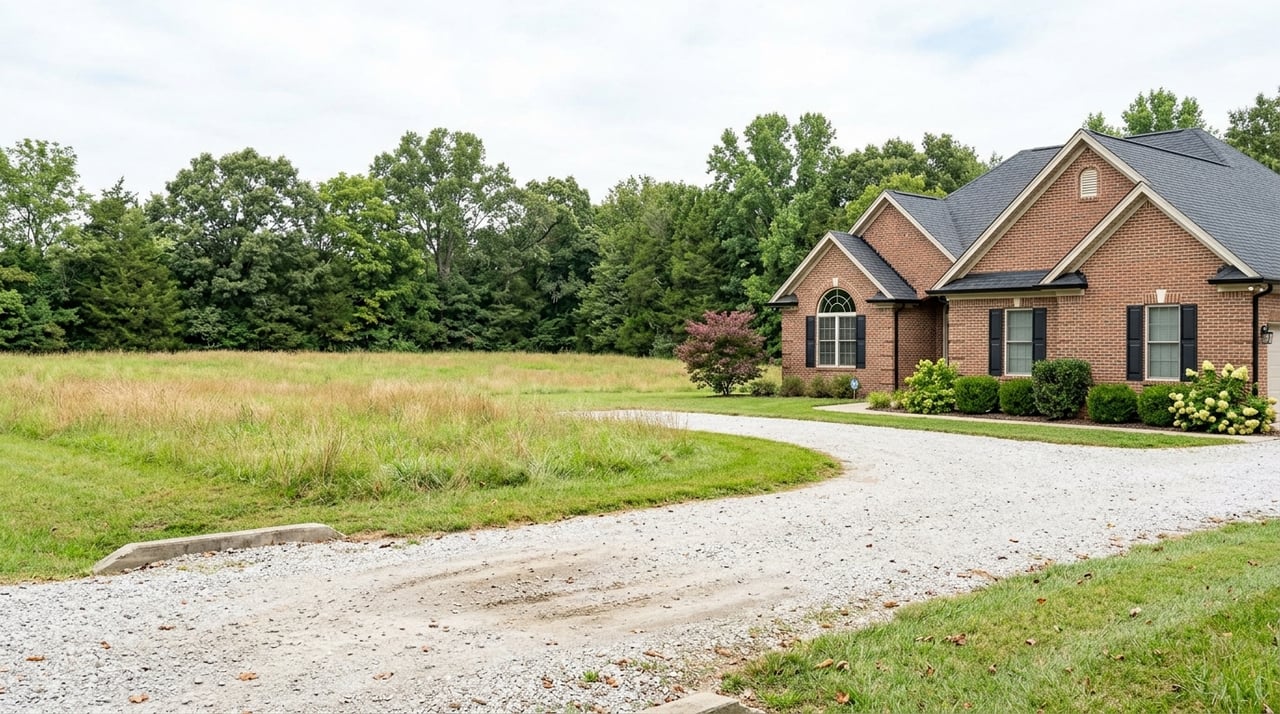
Wondering if that beautiful tract outside Pea Ridge is actually buildable, splittable, or usable for the plans you have in mind? You are not alone. Buying land and acreage can feel exciting at first glance, but the real value of a parcel often comes down to rules, access, utilities, and approvals you cannot always see from the road. This guide will help you understand the key issues to check before you buy land around Pea Ridge so you can move forward with more confidence. Let’s dive in.
Start With Jurisdiction
One of the first things to confirm is whether the property is inside the City of Pea Ridge’s Planning Area or in unincorporated Benton County. That single detail can shape what rules apply to the land and what steps you may need to take before building or dividing it.
In Pea Ridge, subdivision rules apply within the city’s Planning Area, and preliminary plat approval is required before grading or construction on a proposed subdivision. Final plat approval and recording come later, before lots can be conveyed. In unincorporated Benton County, the county states it does not have zoning in those areas, though subdivision rules still apply and commercial or industrial projects need county planning approval.
For buyers, this means county acreage may seem more flexible at first, but flexibility does not remove the need to verify the basics. You still need to look closely at access, floodplain issues, septic feasibility, and whether the parcel can realistically support your intended use.
Check Zoning and Land Use
If the property is in Pea Ridge’s jurisdiction, zoning matters right away. The city’s base districts include A Agriculture, RE Residential Estate, R-1 Low Density Residential, R-2 Medium Density Residential, R-3 High Density Residential, R-4 Multi-Family Residential, C-1 Neighborhood Commercial, C-2 General Commercial, and I Industrial.
Those districts do more than label land. They can affect lot size, housing type, and whether your intended use is allowed. For example, the city describes RE as estate lots of at least 1 acre, R-1 as single-family lots of at least 12,000 square feet, and R-2 as single-family lots of at least 8,000 square feet.
The city also uses a use table with “P” and “C” designations. If a use is marked P, it is permitted by right. If it is marked C, it requires conditional approval. If neither appears, the use is not permitted.
That matters if you are buying land for more than just a standard homesite. A parcel may look perfect for a custom home, a hobby farm, or a small investment idea, but the district and use table may point you in a different direction.
What Hobby Farm Buyers Should Know
If you are thinking about crops, animals, or small agricultural activity, the city’s use table is especially important. Crop agriculture is permitted by right in A, RE, R-1, and R-2. Animal agriculture is permitted by right only in A and is conditional in other residential districts.
Product sales tied to agriculture are also more limited outside the A district. So even if a property feels rural, you should not assume it supports every rural use. The land may be large enough, but still not match your goals for livestock, outbuildings, or small-scale sales activity.
Focus on Access Early
Acreage buyers often focus on price per acre, views, or road frontage first. In practice, legal and practical access can be one of the biggest make-or-break issues.
Benton County requires a driveway permit before construction begins on a driveway serving a county road. If access is needed from a state highway, ARDOT requires an access driveway permit for residential or commercial purposes.
This is why access needs to be checked early, especially for land on or near major roads. If the driveway location is difficult, restricted, or costly to permit, the parcel may not work as smoothly as it seems.
Water, Sewer, and Septic Matter More Than Size
A common mistake is assuming that if a tract is large enough, it is automatically ready for a home. Around Pea Ridge, utility questions often matter more than the number of acres.
Within the city’s planning jurisdiction, subdivision regulations show how infrastructure can shape a project. If a public water supply is available, the subdivider must install water mains and connect to that supply. If public sanitary sewer is available, the subdivider must install sewer lines and provide connection to each lot, unless the Planning Commission finds the connection cost unreasonable compared with another approved sewage method.
The city also requires fire hydrants in subdivisions and inspection of installed sewer lines before final plat approval. For buyers considering a split or small development concept, those requirements can affect budget, timing, and feasibility.
Septic Rules for Acreage Buyers
If public sewer is not available, onsite wastewater review becomes a major part of your due diligence. According to the Arkansas Department of Health, there is no simple minimum lot size for septic approval. Instead, soil suitability, bedroom count, and well setbacks help determine the design.
ADH also notes that a permit exemption may apply to a single residence on 10 or more acres if all parts of the sewage system are more than 200 feet from any property line, including roads. Even so, that exemption does not waive other state requirements.
The big takeaway is simple: a larger parcel is not automatically easier. You need to know whether the land can legally and practically support the water and wastewater setup your plans require.
Review Floodplain Risk Before You Buy
Floodplain issues are easy to underestimate when you are excited about a property. Low ground, drainage areas, or land near mapped flood hazard areas can affect both buildability and long-term costs.
Benton County administers the floodplain program for the county and requires a Floodplain Development Permit before any land disturbance in FEMA Special Flood Hazard Areas. The county also uses its basemap and FEMA Flood Insurance Rate Maps to help identify flood risk.
The county further notes that homeowners insurance does not cover floods. If a parcel is near drainage, creek areas, or low-lying ground, flood insurance should be part of your review before you move ahead.
Understand Platting and Subdivision Timing
If you are buying acreage with plans to divide it, timing matters. In Pea Ridge, preliminary plat approval and improvement plan approval are required before grading and construction work on a subdivision.
The city also states that no building permit will be issued for a lot in an unapproved subdivision. Permanent utilities are not activated until the city accepts the improvements or an acceptable bond or letter of credit is in place.
For a small investor or future seller, this is an important reality check. Raw land value alone does not tell the full story. Approval steps, improvement costs, and utility timing can play just as large a role in what a parcel is really worth to you.
Do Not Skip Covenants and Title Review
Even if zoning or county rules appear to allow your plans, private restrictions may still limit what you can do. Pea Ridge states that the city is not responsible for enforcing deed restrictions or restrictive covenants.
That means an HOA or POA may be more restrictive than the zoning code. For acreage buyers, survey review, title work, and covenant review are not optional details. They are part of knowing what you are actually buying.
Use a Simple Due Diligence Checklist
Before you buy land and acreage around Pea Ridge, make sure you are checking the parcel from several angles. A good tract is not always the biggest one. It is the one with the clearest path to your intended use.
Here is a practical checklist to keep in mind:
- Confirm whether the property is in the City of Pea Ridge’s Planning Area or unincorporated Benton County
- Verify the zoning district, if applicable, and check the city’s use table
- Review minimum lot size standards for the district
- Confirm legal access and whether a driveway permit is needed
- Check whether access will be from a county road or state highway
- Investigate public water and sewer availability
- If sewer is unavailable, review septic feasibility with the county health unit process in mind
- Look at floodplain status and whether a Floodplain Development Permit may be required
- Ask whether your plans would require platting, subdivision approval, or utility extensions
- Review surveys, title documents, deed restrictions, and restrictive covenants
- Use Benton County GIS to verify parcel and district information as an early step
Match the Parcel to Your Goal
Different buyers should ask different questions. The right land for your next home may not be the right land for a hobby farm or a small investment plan.
For a Custom Home
You will want to verify legal access, driveway permitting, utility options, flood status, setbacks, and any private restrictions. The main question is whether you can build the home you want in a realistic and cost-effective way.
For a Hobby Farm
You should confirm whether the district supports crop or animal use, then look at water, septic, drainage, fencing, and covenant limits on animals or outbuildings. Rural appearance alone does not answer those questions.
For a Small Investment Plan
You should determine whether the concept requires a plat, subdivision approval, utility extension, or county or city review. In many cases, infrastructure and approval costs matter just as much as the land’s asking price.
Buying land around Pea Ridge can be a smart move, but the best opportunities usually come from careful planning, not quick assumptions. When you understand jurisdiction, access, utilities, floodplain concerns, and private restrictions up front, you are in a much better position to choose a tract that truly fits your goals.
If you are comparing acreage, planning a custom build, or looking for land with long-term potential in Northwest Arkansas, Nancy Orum can help you evaluate your options with clear, local guidance and personal attention.
FAQs
What should you verify before buying acreage around Pea Ridge?
- You should verify jurisdiction, zoning or land-use rules, access, driveway permitting, water and sewer availability, septic feasibility, floodplain status, and any private covenants or deed restrictions.
Does unincorporated Benton County have zoning for land near Pea Ridge?
- Benton County states that it does not have zoning in its unincorporated areas, but subdivision rules still apply and commercial or industrial projects need county planning approval.
Can you use any Pea Ridge acreage for a hobby farm?
- No. In Pea Ridge, crop agriculture is permitted by right in A, RE, R-1, and R-2, while animal agriculture is permitted by right only in A and is conditional in other residential districts.
How does septic approval work for land around Pea Ridge?
- If public sewer is not available, onsite wastewater review is handled through the county health unit process, and septic design depends on soil suitability, bedroom count, and well setbacks rather than a simple minimum lot size.
Why does road access matter when buying land in Benton County?
- Road access matters because Benton County requires a driveway permit for driveways serving county roads, and ARDOT requires an access driveway permit when a property needs access to a state highway.
Do floodplain rules affect land purchases near Pea Ridge?
- Yes. Benton County requires a Floodplain Development Permit before land disturbance in FEMA Special Flood Hazard Areas, and flood risk can affect buildability, insurance planning, and development costs.
Can you split land in Pea Ridge without plat approval?
- If the property is part of a proposed subdivision in Pea Ridge’s Planning Area, preliminary plat approval is required before grading or construction, and final plat approval and recording come before lots can be conveyed.
Do deed restrictions matter if zoning allows your plans in Pea Ridge?
- Yes. Private covenants or deed restrictions can be more restrictive than zoning, and the city states it is not responsible for enforcing those private restrictions.