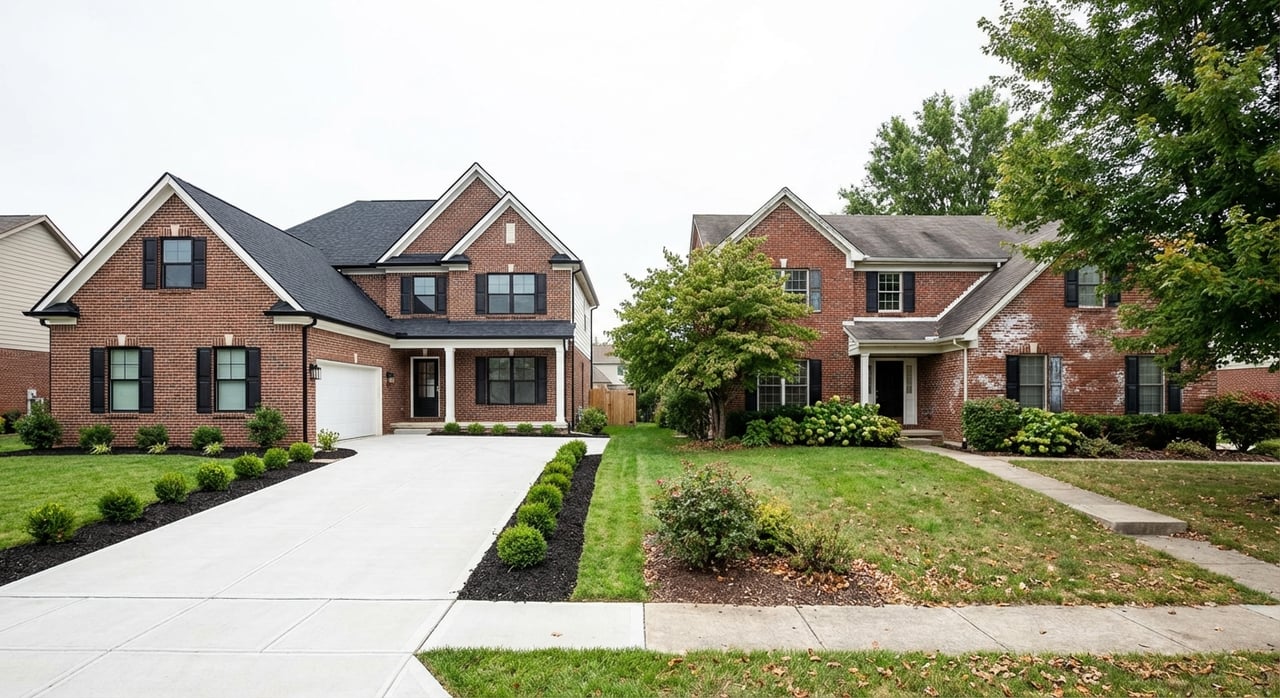
Trying to decide between a brand-new home and a resale in Centerton? You are not alone. Each path offers real trade-offs in price, timeline, lot size, and long-term upkeep. In this guide, you will see how new construction and resale stack up in Centerton so you can choose with confidence. Let’s dive in.
Centerton market snapshot
Centerton has a visible pipeline of new homes, with many active subdivisions and spec builds. Public price measures vary by source and date. For example, Realtor.com reported a median listing price near $441,477 in Dec 2025, Redfin showed a median sale price near $357,420 in Jan 2026, and Zillow’s ZHVI was about $346,867 on Dec 31, 2025. The market leaned seller-friendly through 2024 and 2025, but pace and pricing still vary by neighborhood and price tier.
Price and purchase mechanics
Builders usually quote a base price for a floor plan, then add a lot premium and optional upgrades. In Centerton, communities such as Magnolia Landing by Schuber Mitchell show plans starting in the low-to-mid $300Ks for move-ins and new starts. You also see higher-end offerings, like larger plans in upscale subdivisions that start in the $500Ks. These examples highlight why list and sale medians vary and why you should compare total cost, not just the headline price.
Buyers often have more room to compare value with resale. You might find an updated home that rivals a new build on finishes or an older home with a larger lot. When you compare, factor in immediate upgrades, likely maintenance, and your move-in timeline.
- Explore local new-build pricing examples at the Magnolia Landing community page: Magnolia Landing by Schuber Mitchell
Finishes and energy efficiency
Many newer Centerton homes promote open layouts, tall ceilings, gas cooktops, engineered flooring, and community amenities like trails and pools. New construction also tends to include newer insulation, tighter building envelopes, and higher-efficiency HVAC and appliances. Some builders pursue ENERGY STAR or DOE Zero Energy Ready paths, which can support lower utility costs and access to incentives. If a builder claims energy savings, ask for the specific certification or test results and whether the home qualifies for the federal 45L builder tax credit pathways described by Green Summit Engineering.
Lots, setbacks, and site work
Typical lots in Centerton subdivisions often run about 0.15 to 0.25 acres based on recent planning notices. If yard size is important, review the community plat and exact lot dimensions before you sign. On the edge of town, you will also find larger parcels or rural tracts, some of which may rely on wells and septic systems rather than municipal water and sewer. That difference affects permitting, maintenance, and long-term costs.
- See recent local planning notices that show lot patterns: Centerton subdivision notices
- Example of rural listings with well or septic in the broader area: Nearby buildable tracts
Timelines: contract to closing
If you build from dirt, national data suggests a typical timeline of roughly 6 to 12 months, depending on the type of build and how far along construction is. Spec and production homes tend to finish faster than custom builds. If the home is already underway or move-in ready, your closing timeline can look similar to a resale. Review the builder’s written schedule and ask what happens if milestones slip. For a clear overview of average build durations, see this summary on how long it takes to build a house.
Maintenance and warranties
New homes commonly come with a structured warranty, often described as a “1-2-10” program. That means 1 year for workmanship and materials, 2 years for major systems, and 10 years for structural coverage. Ask the builder for the full warranty booklet, who administers claims, and whether coverage is insurer-backed and transferable. Learn how insurer-backed structural coverage works at StrucSure.
Resale homes can offer great value but may need near-term repairs or replacements. A simple rule of thumb is to set aside about 1 percent of the home’s value each year for maintenance and adjust for the home’s age and condition. Independent inspections and a review of permits and service records help you budget accurately.
Financing and incentives
If you are building from scratch, you may need a construction or construction-to-permanent loan. These loans require builder approval, plans, and a build schedule, and they come with different draw and interest structures than standard mortgages. Buyers who want speed often focus on spec homes to avoid construction financing. For an overview, see this guide on construction timelines and financing.
Parts of greater Centerton and Benton County can be eligible for USDA Rural Development loans depending on the address. These programs offer zero-down options with income and location guidelines. You can check general eligibility indicators by area using this USDA loan location lookup, then confirm specifics with your lender.
Quick chooser: which path fits you
Choose new construction if you want:
- Modern layouts, current systems, and lower near-term upkeep.
- The ability to select finishes and options.
- Warranty protection and potential energy certifications.
Choose resale if you want:
- Potential price savings or a larger lot within the same budget.
- A faster move-in with fewer construction unknowns.
- Established landscaping and neighborhood character.
Centerton buyer checklist
Use this checklist to move from research to action.
Questions for builders:
- What is included in the base price versus paid upgrades? Ask about counters, lighting, flooring, and window coverings. Community pages like Magnolia Landing show typical inclusion levels.
- Is there a lot premium and is it refundable if plans change?
- What warranty applies and is it insurer-backed? Review the booklet and transfer rules. See examples at StrucSure.
- What is the build schedule for this lot and what happens if dates slip? Get it in writing.
- What inspections can you conduct, and can you hire an independent inspector at key stages?
Questions for resale listings:
- What major components have been updated and were permits pulled for significant work?
- What utilities serve the home: municipal water and sewer or well and septic? Ask for service records if private systems are used. See examples of rural utilities in nearby listings here.
- Is the home in a FEMA-mapped flood zone? Confirm at the FEMA Flood Map Service Center.
Verification steps for both paths:
- Confirm estimated property taxes and any homestead benefits using the Benton County Assessor’s property tax estimator.
- Schedule phase inspections for new builds and a full inspection for resales. Plan an 11-month warranty review on new homes so coverage applies while still in the warranty window. Here is a helpful primer on inspection timelines and follow ups: How long do home inspections take?
Ready to compare real options in Centerton? Get personalized guidance on communities, timelines, and total cost so you can feel great about your decision. Reach out to Nancy Orum for a friendly, no-pressure consultation.
FAQs
What are typical Centerton home prices for new vs resale?
- Public data sources differ by date and method. In late 2025 and early 2026, reported medians ranged from the mid $300Ks to low $400Ks. Compare like for like and focus on total cost.
How long does a new build usually take in Centerton?
- Many builds run about 6 to 12 months depending on plan, permitting, and materials. Spec homes already underway can close faster.
Do new Centerton homes come with warranties?
- Most builders offer structured coverage, often a 1-2-10 program. Always read the warranty booklet and confirm who handles claims and whether coverage is transferable.
Are lots in new subdivisions smaller than older neighborhoods?
- Many new subdivision lots run about 0.15 to 0.25 acres based on recent planning notices. Check the specific plat and lot dimensions for the home you want.
Can I use USDA financing near Centerton?
- Some addresses in the greater area may be USDA-eligible. Use a location lookup tool and confirm eligibility with your lender.
What inspections should I plan for a new build?
- Ask for pre-drywall and final inspections, then schedule an 11-month warranty checkup to catch items while still under coverage.